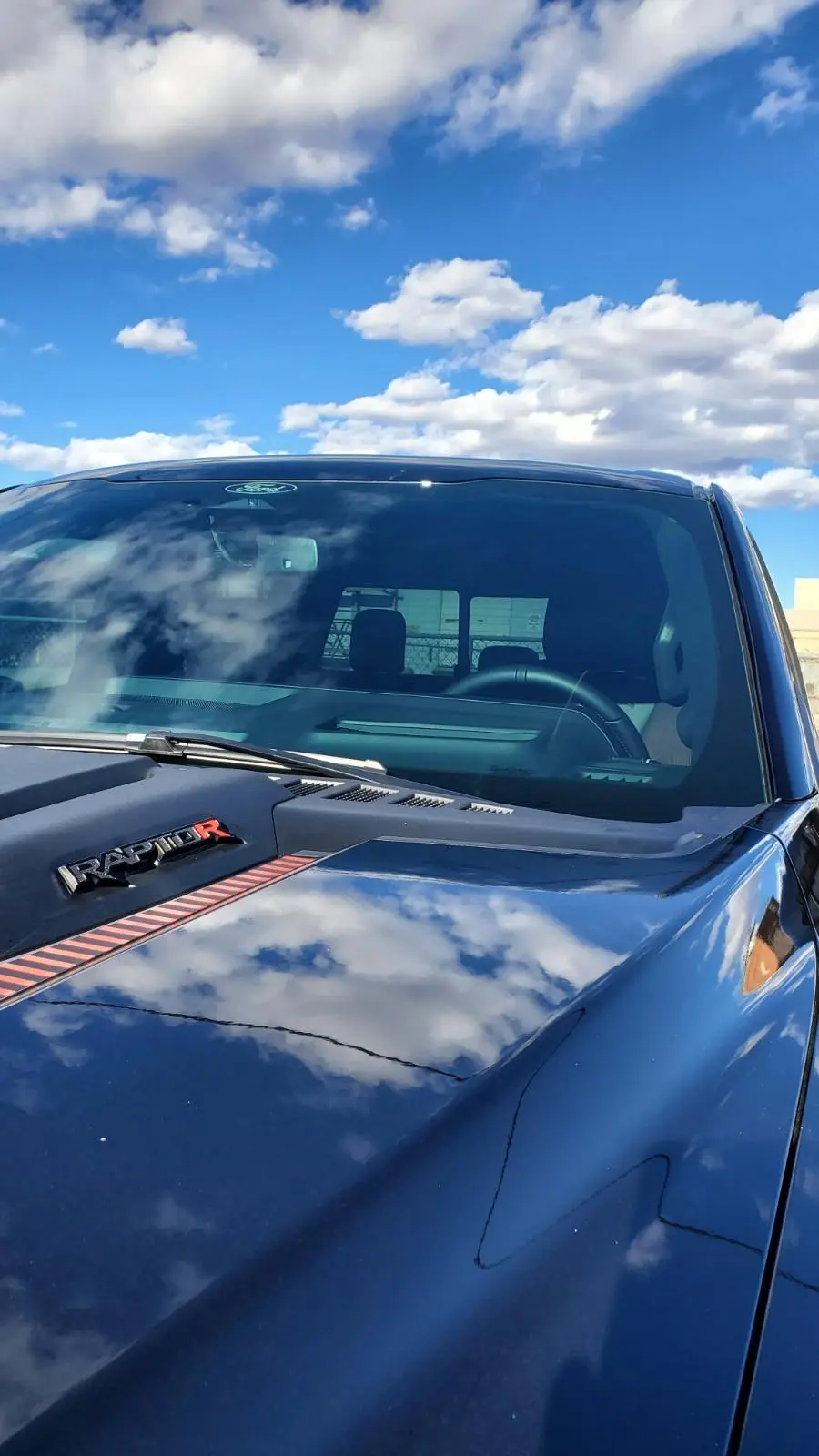
Quick answer: Legal tint in Colorado means every window except the windshield must let through at least 27% of light. The windshield must let through at least 70%, apart from a strip across the top no more than 4 inches deep. Windows behind the driver can only go darker than 27% if the front side windows and windshield stay at 70% or lighter.
We’ve been tinting cars in Colorado since 1991, and the law below comes straight from the statute, C.R.S. 42-4-227, not from a forum.
Window | What Colorado allows |
|---|---|
Windshield | At least 70% of light through |
Top strip of the windshield | Any shade, no more than 4 inches deep, not red, amber or reflective |
Front side windows | At least 27% |
Rear side windows and back glass | At least 27%, or darker only if the fronts and windshield are 70% or lighter |
Factory privacy glass | Legal as it left the factory |
Mirrored or metallic film | Not allowed on any window |
On this page
- What is the legal tint limit in Colorado?
- What is the darkest legal tint in Colorado?
- Can you tint your windshield in Colorado?
- What’s the fine for illegal tint in Colorado?
- How do police check tint in Colorado?
- Does Colorado’s tint law apply to out-of-state cars?
- Is there a medical exemption for dark tint in Colorado?
- What we see in the shop
- Frequently asked questions
- Get it done legally
What is the legal tint limit in Colorado?
The legal tint limit in Colorado is 27%, measured as the share of light that gets through the glass. It applies to every window on a Colorado-registered vehicle except the windshield, which has its own 70% rule.
That 27% is called VLT, short for visible light transmission. Lower numbers are darker, which is the opposite of how every other number in life works and the reason half of Colorado has accidentally asked for “the 70” when they meant limo black.
So a “27% tint” lets 27% of the light in and keeps 73% out. It’s the darkest film you can put on your front side windows and stay legal, and it’s dark enough that your neighbors will assume you’ve joined witness protection.
What is the darkest legal tint in Colorado?
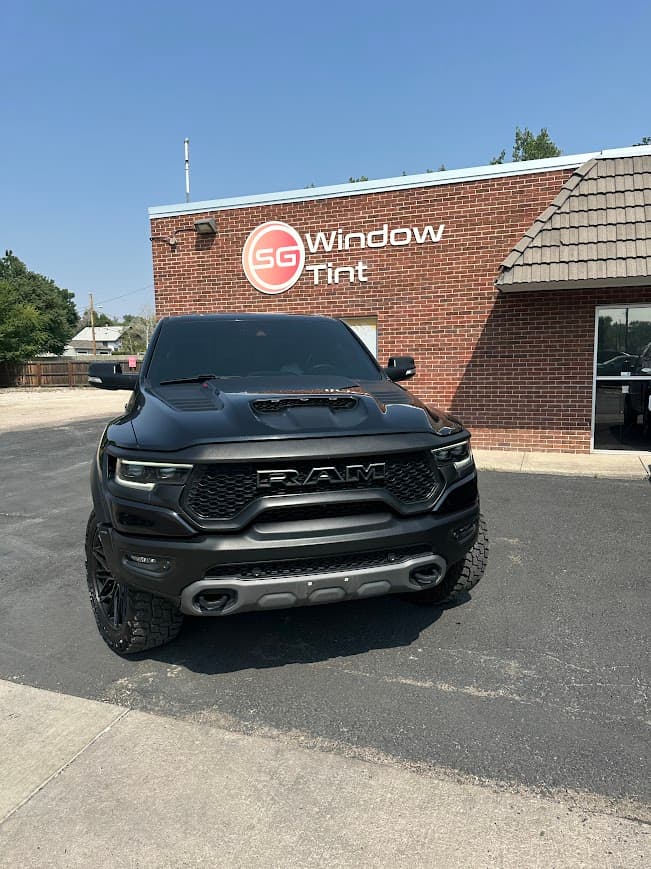
The darkest legal tint in Colorado is 27% on the front side windows. Your rear side windows and back glass can go darker, even down to 5%, but only if your front side windows and windshield let through at least 70% of light.
Here’s the catch most websites miss. People read “rear windows can be darker” and stop there, the way you stop reading a recipe right before the line that says “marinate overnight.” The full rule in the statute says the rear windows get that freedom if the front side windows and windshield allow at least 70% light.
In plain terms, you get to pick one:
- Option one: 27% or lighter on every window. This is what most people mean when they say “legal tint.”
- Option two: clear-ish fronts at 70% or lighter, and the back half as dark as you like.
What you can’t do legally is 27% on the fronts and 5% on the back. That combination is everywhere in Colorado, which tells you something about how many people read past the first line of a statute.
Factory privacy glass is the exception that saves SUV owners. The statute allows glass that was part of the vehicle when it was made, if it meets federal rules, so the dark rear glass on your crossover is fine as it came. Adding film on top of glass that’s already dark changes it, so ask before you stack.
Can you tint your windshield in Colorado?
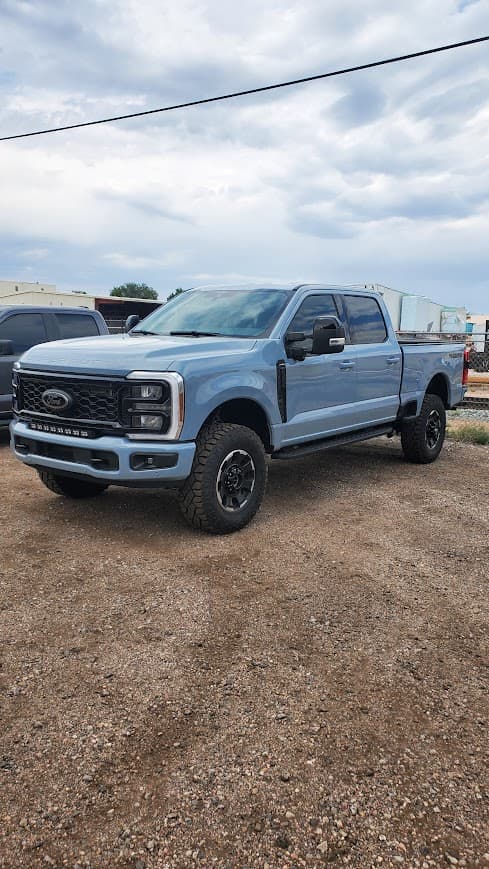
Yes, you can tint your windshield in Colorado, within two limits. The windshield must let through at least 70% of light, and a darker strip is allowed only across the top, no more than 4 inches down, and not red, amber or reflective.
That leaves two real options:
- An eyebrow strip. A band of tint across the top 4 inches that blocks the sun when it’s low. With us it costs $60.
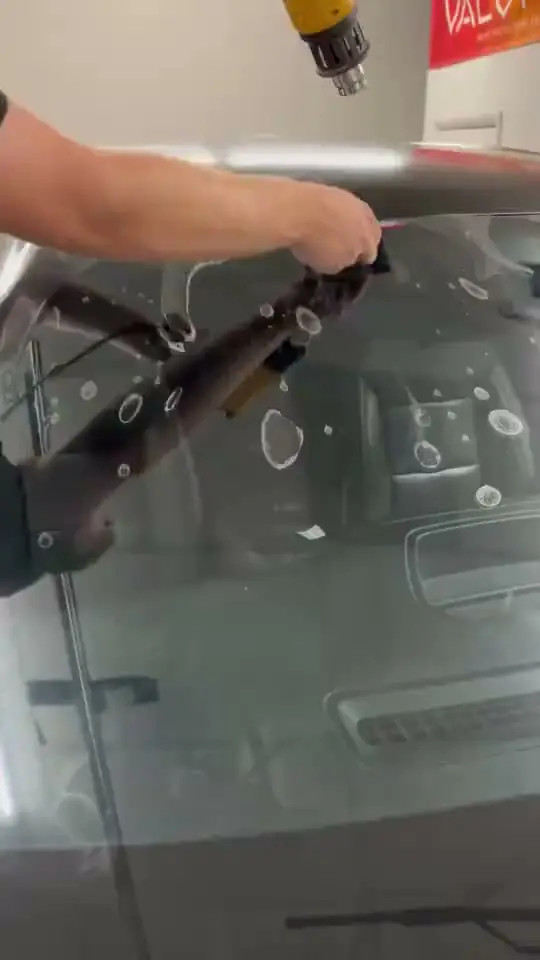
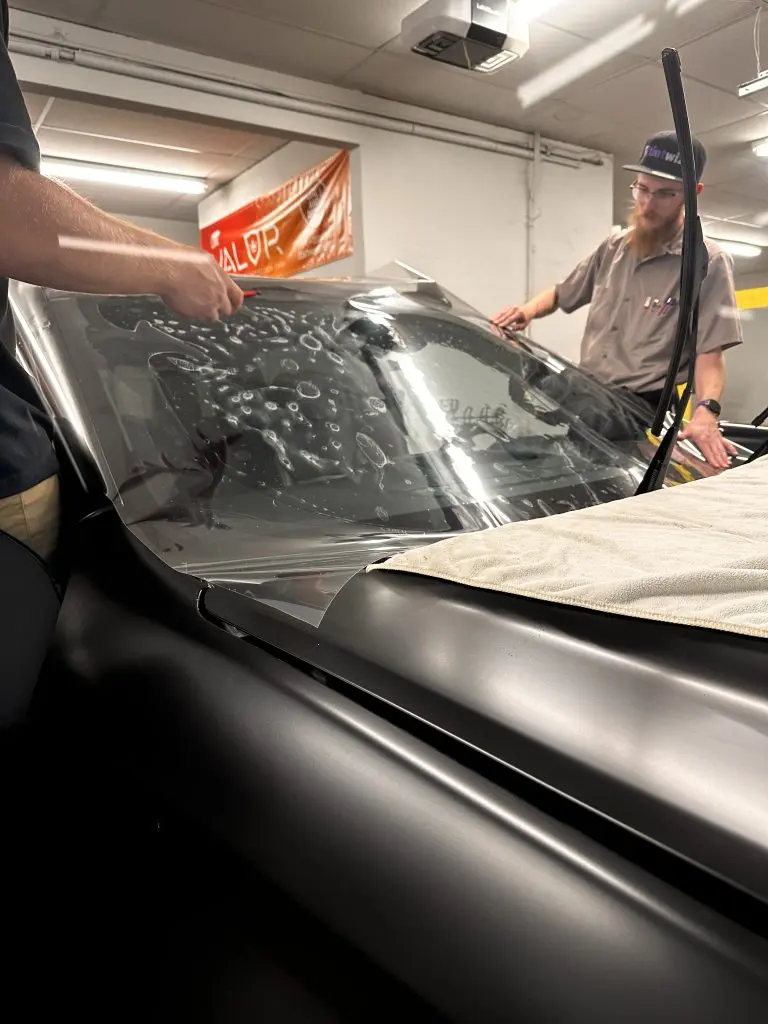
- A clear heat-cutting film on the whole windshield. It keeps the windshield at 70% or lighter while cutting heat, and it costs $279 or $379 with us.
Clear windshield film is the most underrated thing we sell. Pearl W. had Autobahn i3 put on her windshield in Fort Collins and wrote: “The heat rejection is amazing. It’s like driving in a whole new vehicle.” It’s invisible, it’s legal, and your dashboard will stop smelling like a hot glue gun.
What’s the fine for illegal tint in Colorado?
Illegal tint in Colorado is a class B traffic infraction for the driver. The state’s penalty schedule lists $50 for this section plus a $16 surcharge, so $66, according to C.R.S. 42-4-1701.
You’ll see scarier numbers online. Some news stories quote $500 to $5,000 fines, and those numbers don’t match the schedule in state law. The $66 ticket is real, though, and so is the hour of your life spent at the side of I-25 while an officer holds a meter to your window.
Two more details worth knowing:
- No points. Under the same statute, class B traffic infractions don’t carry license points.
- The installer is on the hook too. The person who installs tint that breaks the rule commits a class A traffic infraction under C.R.S. 42-4-227. So yes, your tinter has skin in this game.
How do police check tint in Colorado?
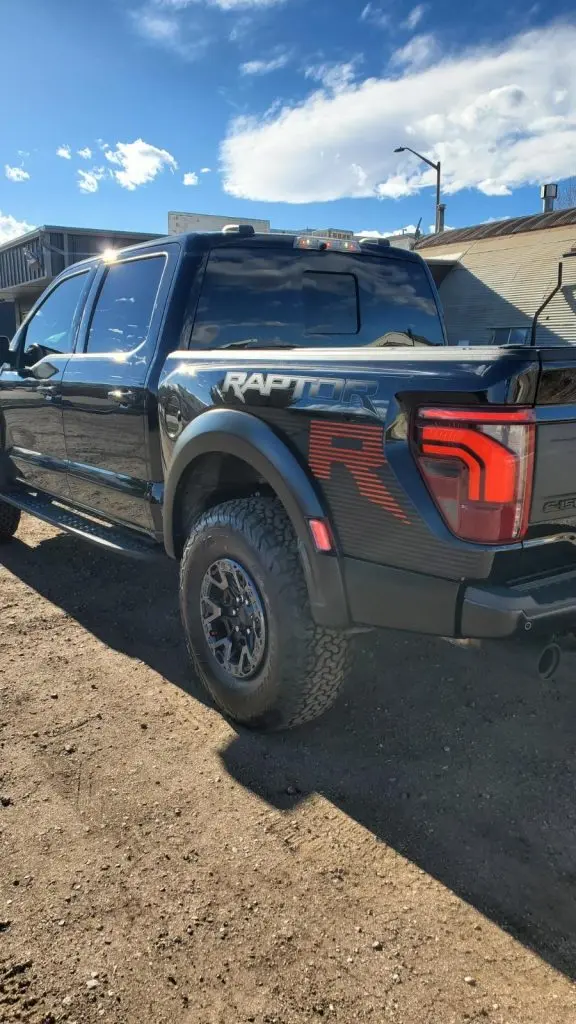
Colorado police check tint with a tint meter, a small device that clamps onto the glass and reads how much light gets through. A Gigafact fact brief on Colorado’s tint law notes that troopers can pull you over for tint alone.
The same brief says the Colorado State Patrol wrote 210 tint tickets in 2026 at the time it was published, against 480 in 2025. That’s not a crackdown. It’s also not zero, and zero is the number you want on your own record.
One Fort Collins driver described it on Reddit: “Officer tested every single window.” Then came the line that stings: “The irritating part is I bought the car that way.” Used cars don’t come with a tint receipt, so if you’re not sure what’s on yours, a shop can meter it for you before an officer does.
A tint meter reads the glass and the film together. Factory glass isn’t perfectly clear, so a film’s box number and its reading on your car aren’t the same thing. That’s why “it said 30% on the box” isn’t a defense, and why it’s worth picking a shade with the glass in mind.
Does Colorado’s tint law apply to out-of-state cars?
Colorado’s 27% rule is written for vehicles registered in Colorado. The statute’s own wording covers “a motor vehicle registered in Colorado,” so a car registered elsewhere is judged by that wording.
You may read that Colorado has a 20% rule for out-of-state cars. It doesn’t. That idea came from HB19-1067, a 2019 bill that was postponed indefinitely in committee, which is lawmaker for “we’ll never speak of this again.”
If you’ve just moved here, the clock starts when you register the car in Colorado. That’s the moment your Arizona-legal 20% becomes a Colorado conversation.
Is there a medical exemption for dark tint in Colorado?
No. Colorado’s tint statute has no medical exemption, as Colorado law firms like Colorado Law Defense Group point out. A doctor’s note won’t change the 27% and 70% limits.
If comfort is the reason you want darker glass, the legal answer is a better film, not a darker one. Ceramic film blocks heat at light shades, which is a far better deal than arguing with a statute.
What we see in the shop
Most people who ask us for “the darkest legal tint” don’t actually want dark. They want cool, and they want to stop squinting. Here’s what we see at the counter.
- Heat rejection without going dark. Our own Instagram put it plainly: “Heat rejection without going dark, full visibility, and zero attention from the cops.” That’s what a light ceramic film does.
- Light ceramic beats dark dyed. On Autobahn’s published specs, their i3 ceramic at 56% light blocks up to 56% of the sun’s total energy. Their dyed film tops out at 43%, according to Autobahn’s comparison chart.
- Glare is a safety issue. Michael E., a full-time rideshare driver in Denver, wrote: “Window tint is not a luxury item; it’s a safety feature.”
- Snow glare surprises people. Dan H. in Fort Collins had a new windshield and wrote: “the snow glare was awful!”
If heat is the real problem, our ceramic vs carbon tint guide explains why the film matters more than the shade. And if you want to see what each shade looks like, our tint percentages page shows them side by side.
Frequently asked questions
What is the darkest legal tint in Colorado?
27% on the front side windows. The rear windows can go darker only if the front side windows and the windshield let through at least 70% of light.
Is 20% tint legal in Colorado?
Not on the front side windows, which need at least 27%. 20% is legal on the rear windows only if your front side windows and windshield are 70% or lighter.
Can I tint my windshield in Colorado?
Yes, within limits. The windshield must let through at least 70% of light, and a darker strip is allowed only across the top 4 inches.
How much is a tint ticket in Colorado?
The state penalty schedule lists $50 plus a $16 surcharge for this section. It’s a class B traffic infraction, which carries no license points.
Is factory privacy glass legal in Colorado?
Yes. The statute allows glass that was part of the vehicle when it was made and meets federal rules.
Get it done legally
The easiest way to stay legal is to pick the film first and the shade second. Book car window tinting at our Lakewood shop or auto tint at our Fort Collins shop, see the price before you book, and drive home cooler without a tint meter in your future.

Landon Steinkamp, General Manager, SG Window Tint
Landon has tinted windows for 7 years and fitted paint film and ceramic coating for 5. He started his own shop in a two-car garage in 2018 before becoming SG Window Tint’s General Manager. He runs the Lakewood shop.